How AI is Impacting IT Recruitment and Job Roles


Table of Contents
On the one hand, recruitment seems to be a straightforward process, but in reality, it is a very complicated and risky process. Whether it is attracting the right people or selecting the best talent among a large number, the recruiters are under pressure to make right decisions in a fast and fair manner. The price of a bad hire or even the hire of the right person who quits prematurely can be greater than five times the salary of the person making it a more serious matter.
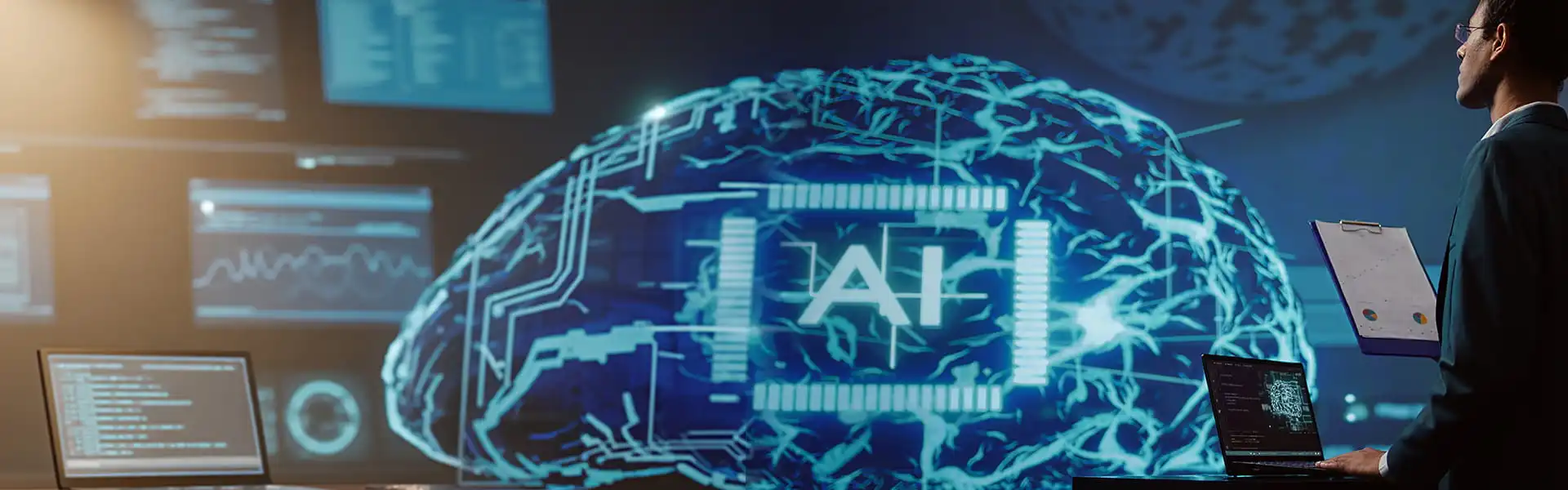
Fortunately, artificial intelligence (AI) is transforming the game. The use of AI in hiring is no longer a buzzword but rather a necessity as more than 90 percent of employers have incorporated some form of automated job application screening or ranking system. So, what does AI do in recruitment? What is its effectiveness? Is it replacing human recruiters or just helping them?
This article aims to examine the practical application of AI in recruiting and merge field experiments, industry trends, and the latest technologies to create a clear image of what is working and what should be approached with caution.
The Cost of Conventional Recruitment
Conventional recruitment processes are laborious, tedious and even subjective. Human recruiters often cannot cope with the number of applications. As an example, in 2024:
- Goldman Sachs had 315,126 applications of interns.
- Google received more than 3 million applications.
- McKinsey received over 1 million.
Between 2014 and 2022, 220.5 million applications have been received by the Indian government with respect to central government jobs.
It is practically impossible to sort through this sheer amount of data manually. Additionally, most job applicants inflate their abilities on job applications, and this may result in poor hiring decisions and missed top talents. Burnout, bias, and resource shortages all played a part in the traditional model, which was obviously in need of assistance.
Enter AI: The Intelligent Way to Hire
Artificial Intelligence, also known as AI, is a set of machines or software that emulates the way humans think, such as comprehending language, identifying patterns, and decision-making. It is used in recruitment to:
- Write and post job descriptions
- Interview and evaluate applicants
- Schedule interviews
- Respond to Tips on Tiresome Applicant Questions
- Interview analysis
More than 88% of the companies already use AI in at least the first stage of candidate screening. Robotic tools are able to read and analyze resumes with machine learning and NLP, identify keywords, and even measure personality traits. A few platforms take resume scanning to another level by assessing candidates in terms of soft skills, job fit and emotional intelligence.
The Breakthrough: Conversational AI Interviewers
Whereas most companies employ keyword-based AI programs to filter resumes, micro1 went a step further and created conversational AI interviewer. This dynamic tool does not depend on resumes or self-reports of skills. Rather, it uses real-time job-specific interviews to assess technical and soft skills.
Compared to conventional AI solutions that might perpetuate prejudice through past data, the model adjusts its line of questioning, which makes it more fair and customized. It eliminates dependence on background, name, gender, or educational prestige, factors that have been known to bring unconscious bias.
An example is Amazon, which was forced to abandon an AI recruitment tool that discriminated against resumes that included the term “women’s” because it was trained using biased previous data. Conversely, conversational AI tools are more about real performance, so underrepresented and non-traditional candidates have a more equal chance.
Real Life Outcomes: The Stanford Experiment
A Stanford study by Emil Palikot, Ali Ansari, Ada Aka, and Nima Yazdani (USC) compared traditional recruitment and AI-led interviewing. Comparison was done between two pipelines.
- Traditional: Resume ranking through an automated system, and then followed by human interviews
- AI-assisted: AI-led structured interviews with human interviews on the best performers
The Results Were Impressive
The percentage of candidates who passed the human interview after the AI one was 3.12
Traditionally selected candidates passed only 28.57 percent.
The AI-driven process assisted recruiters in finding more suitable talent at the early stages, saving time and enhancing the quality of the process. Interestingly, AI interviews scored higher than human-led interviews when it comes to questions and conversation flow quality. They were also more objective, less subjective.
Also, the AI model was especially useful to younger applicants, less experienced, and women, with measurable improvements in outcomes among these groups.
How AI Can Be Applied in Recruitment
So how exactly is AI changing each step of the hiring funnel? Let us have a look at the prominent ways:
Recruitment of the right applicants
With little input, we can use AI to create job descriptions and make them consistent in all their postings. These can then be targeted to the most appropriate candidate pools based on algorithms that are able to comprehend job seeker behavior and preferences.
Not only does this improve employer branding, but also attracts better-fit applicants at the outset.
Smart Candidate Screening and Skill Assessment
Scanning of candidates is claimed to be the most challenging aspect of the recruitment process. It is made less cumbersome with the help of AI.
- Scanning will continue on the relevant skills, even when they are in different words.
- Matching candidates with potentials rather than keywords only.
- Developing pre-screening tests and tailored questions with the help of such platforms as WeCP AI Copilot.
This will enable recruiters to have a shortlist of truly qualified candidates.
Lessening Routine, Monotonous Tasks
Chatbots that are AI-powered will be able to respond to frequently asked questions by applicants, update them on the status of their application, and even book interviews. This aids in enhancing the candidate experience, which is a key determinant of whether prospects accept employment offers.
In reality, surveys indicate that almost 50 percent of job applicants are favorable towards those businesses that offer timely updates and interview schedules beforehand.
Assisting the Interviewing Procedure
Artificial Intelligence tools are now able to.
- Interpret candidate answers to propose new interview questions
- Pay attention to non verbal clues such as body language, tone and facial expression in order to provide more information
- Evaluate and gauge interviews on their quality, and make sure that each candidate has an equal opportunity
- This relieves the burden on human interviewers and provides uniformity in assessment.
The Advantages of AI in Hiring
As AI finds its way into the recruitment process, it is worth recognizing the major benefits it offers to both the hiring organizations and the job seekers.
Saves Time
AI can do mundane work at blistering speeds. Tasks that would take weeks (e.g. screening hundreds of resumes) can now be done in minutes.
Increases Hiring Accuracy
Burned-out recruiters can miss the best candidates or make mistakes in judgment Instead, IA uses uniform standards and will never become weary, which helps to enhance decision-making and the accuracy of selection.
Minimizes Bias
Unlike human beings, AI does not automatically discriminate against the applicants in terms of name, race, or school. It is even capable of concealing personal information to guarantee more objective assessments.
Boosts Efficiency
Automating the administrative part of the job, recruiters will be able to devote more time to human connections and strategic choices, and reduce hiring expenses by up to 87.64 percent in certain cases.
Enhances Employer Branding
Applying AI demonstrates to candidates that a company is progressive. The uniform, technological experience also serves to create trust and make the brand more favorable in the eyes of potential employees.
Possible Pitfalls to Be Aware Of
Regardless of the advantages, employers have to consider challenges, which they must actively address:
Impersonal Interactions
Candidates tend to appreciate the human factor, the possibility of communicating with recruiters, answering questions, and telling personal stories. Automation that is overused can render the process cold and robotic.
Machine Bias
Although AI is objective in principle, it is trained on past information, which can be subject to certain biases. When uncontrolled, it can propagate and strengthen unfair hiring practices. It still requires human supervision to detect and remedy such problems.
The Future: Human AI Cooperation
AI is not here to substitute recruiters. It is present to assist them, particularly in some of the more time-consuming, repetitive, or error-prone tasks. Human intelligence is also still important in assessing cultural fit, personality, communication, and emotional intelligence.
The best hiring models will be a combination of:
- The speed, scale, and consistency of IA
- Human understanding, feeling and discernment
- This teamwork results in more diverse, equal, and effective recruiting procedures. In the long run, AI can even assist in workforce planning, as it will enable the employer to:
- Identify talent shortages
- Recommend upskilling routes
- Recommends career matches to job seekers using strengths
Final Thoughts
The use of AI in recruitment is not a mere fad, but rather a sensible response to the modern job market, which is competitive and characterized by high volumes. It saves time, reduces expenses, and makes things fairer, all the time assisting recruiters to do what they do best: connect with people.
By implementing ethical, human-centric AI tools, companies will not only be able to create stronger teams but also establish themselves as innovative, inclusive, and future-ready employers.