If a Company Terminates an Employee in the UAE, Benefits


Table of Contents
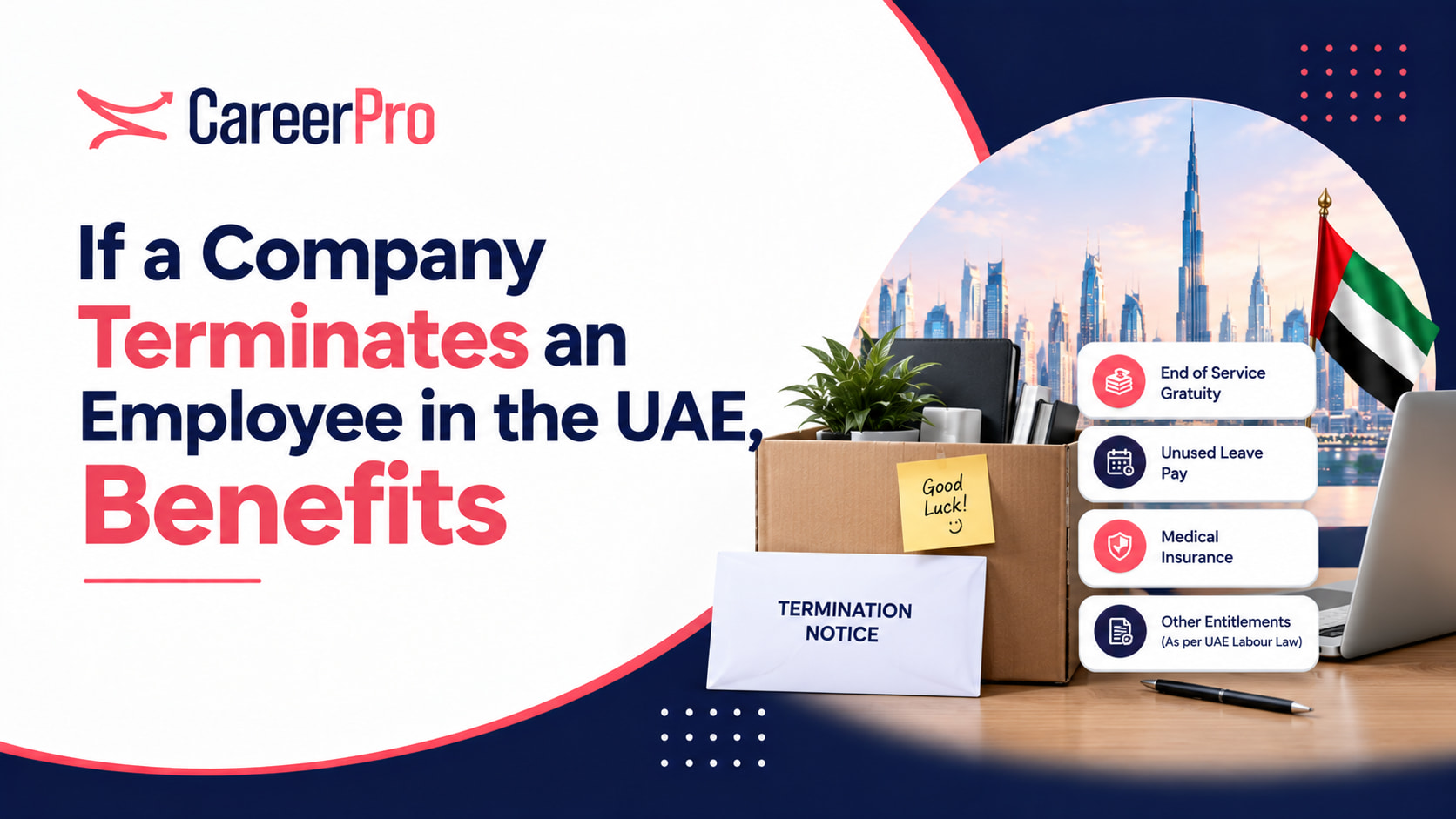
Under the UAE Labour Law, Federal Decree-Law No. 33 of 2021, employees whose employment is terminated may be entitled to end-of-service gratuity, unpaid salary, compensation for an unserved notice period, payment for unused annual leave, and other outstanding contractual dues, subject to applicable legal requirements.
However, all these termination benefits depend on the employee’s length of service, employment contract, reason for termination, and applicable labour regulations. Keep reading this guide to understand everything about termination benefits in the UAE.
What Is Meant By Employee Termination Benefits?
Termination benefits are the payments and other entitlements an employee may receive when their employment ends. This can happen when an employee resigns, is laid off, is dismissed, or reaches retirement, depending on the UAE’s labour laws and the company’s policies.
Detailed Breakdown of Terminated Employee Benefits
Under UAE labour law, private-sector employees may qualify for various financial entitlements when their employer ends their employment. The five main benefits are outlined below.
Unpaid Salary and Outstanding Dues
Employers must pay salary earned up to the employment end date, along with other outstanding contractual entitlements. Depending on the agreement, these may include earned commissions, eligible incentives, or other amounts already due.
End-of-Service Gratuity
Eligible foreign employees who complete at least one year of continuous service may receive gratuity based on their last basic salary and qualifying service period.
Notice Pay or Payment in Lieu
If the employer does not require the employee to serve the applicable notice period, compensation may be payable for the full notice period or the unserved portion.
Unused Annual Leave
Employees generally qualify for payment for eligible accrued annual leave that remains unused when their employment ends.
Other Applicable Entitlements
Depending on the circumstances, employees may also be entitled to contractual benefits, repatriation expenses, or compensation for legally established unlawful termination. These payments are not automatic in every case. Eligibility and exceptions must be assessed under the applicable rules.
How Is End-of-Service Gratuity Calculated in the UAE?
The calculation of end-of-service gratuity is based on the employee’s last basic salary, rather than the total salary including allowances.
The general calculation is:
- First five years: 21 days of basic salary for each qualifying year.
- After five years: 30 days of basic salary for each additional year.
- Part of a year: A proportional amount may be payable for qualifying service beyond the first year.
- Maximum gratuity: The total statutory gratuity is generally capped at two years’ wages.
Gratuity Calculation Example
For an employee earning AED 6,000 per month with 7 years of continuous service:
- Years 1–5: (21 × 6,000 / 30) × 5 = AED 21,000
- Years 6–7: (30 × 6,000 / 30) × 2 = AED 12,000
Total Gratuity: AED 33,000
Note: Unpaid absence days are excluded from the service calculation. While, special employment arrangements and approved alternative savings schemes may follow different rules.
Notice-Period Termination Benefits Entitlement
Under the general UAE private-sector labour law, the contractual notice period must ordinarily be at least 30 days and no more than 90 days. The applicable employment contract determines the agreed period within that range.
Employees may encounter three situations:
- Notice served: The employee continues working during the notice period and receives the applicable wage.
- Notice not served by the employer: The employer generally owes compensation for the entire notice period or the remaining portion, calculated according to the employee’s last wage.
- Termination without notice: Immediate dismissal is permitted only in legally specified circumstances and subject to the applicable requirements.
For example, if an employee has a 30-day notice period but the employer ends the employment immediately without a legally valid exemption, notice compensation may be due. Employees should review their contracts and termination letters before calculating the amount.
Can an Employee Claim Compensation for Unlawful Termination?
Not every unexpected or unfair dismissal automatically qualifies for compensation under UAE labour law. Employees must distinguish ordinary employer-initiated termination from dismissal that violates specific legal protections.
Under Article 47, termination may constitute unlawful dismissal if it occurs because an employee filed a serious complaint with MOHRE or brought a lawsuit against the employer that is proven valid.
If a court establishes unlawful dismissal under this provision, compensation may be awarded based on factors such as the nature of the work, the damage suffered, and the employee’s service duration. The statutory maximum is generally three months’ wages, calculated using the employee’s last wage.
When Must the Employer Pay the Final Settlement?
Under Article 53 of the UAE Labour Law, employers must generally pay employees’ wages and other applicable entitlements within 14 days of the employment contract’s end date.
The final settlement may include outstanding salary, eligible gratuity, unused annual leave payment, notice compensation, and other amounts due under the contract or applicable law.
Before accepting the settlement as correct, employees should compare the statement with their payslips, employment contract, leave records, and official service dates. Request an itemised breakdown if the employer has not explained how each amount was calculated.
For example, an employee may receive the correct gratuity but discover that accrued leave or notice compensation has been omitted. Checking each component separately can help identify the shortfall. The 14-day deadline is supported by the UAE Government’s official end-of-service guidance.
What Happens to the Employee’s Visa and Other Benefits?
Termination also affects an employee’s immigration and workplace arrangements. The employer generally initiates the relevant work permit and employment-residence visa cancellation procedures, as applicable.
Employees should confirm the cancellation status and the permitted period for remaining in the UAE with the relevant authorities rather than assuming that every employee receives the same grace period.
Employer-provided health insurance may also be affected. Employees should confirm when their existing coverage ends and whether any transition arrangements are available under the applicable insurance rules and policy.
Repatriation expenses may be payable in certain circumstances under UAE law, subject to exceptions, including situations in which the employee joins another employer or the contract ends for a reason attributable to the employee.
Employees should retain their cancellation documents, confirm their insurance status, and check any travel or immigration requirements before making arrangements.
What Should an Employee Do If the Employer Refuses to Pay?
If an employer withholds salary or disputes termination benefits, employees should take practical steps to document the issue.
- Review employment records: Gather the employment contract, termination letter, payslips, leave balance, and service dates.
- Check the calculation: Estimate the gratuity and other applicable dues, paying attention to basic salary, notice arrangements, and unused leave.
- Request clarification: Contact HR or payroll in writing and ask for an itemised explanation of missing or disputed amounts.
- Raise a complaint: If the issue remains unresolved, contact the Ministry of Human Resources and Emiratisation (MOHRE), where it has jurisdiction, or the competent authority for the relevant free zone or employment regime.
Keep copies of correspondence and payment records. Complaint procedures and legal deadlines can vary according to the circumstances, so employees should verify the current requirements with the relevant authority.
Conclusion
When a company terminates an employee in the UAE, the employee may be entitled to several payments, including outstanding salary, end-of-service gratuity, notice compensation, and unused annual leave. However, the exact settlement depends on service duration, basic salary, contract terms, and the circumstances of termination.
Employees should review each settlement component, retain supporting records, and consult the relevant labour authority if their employer fails to pay the amounts due. For complicated disputes or potential unlawful termination claims, qualified UAE employment-law advice can help clarify the available options and applicable deadlines.