How To Hire Your First Employee


Table of Contents
As a startup founder, there’s a point when you need to hire your first employee for additional support to grow your business and manage your workload. By identifying hiring purposes, writing a strong job description, and asking structured interview questions, you can successfully hire the right candidate.
In this guide, you’ll discover how to hire your first employee and select the right candidate for your business, and whether you are ready for it.
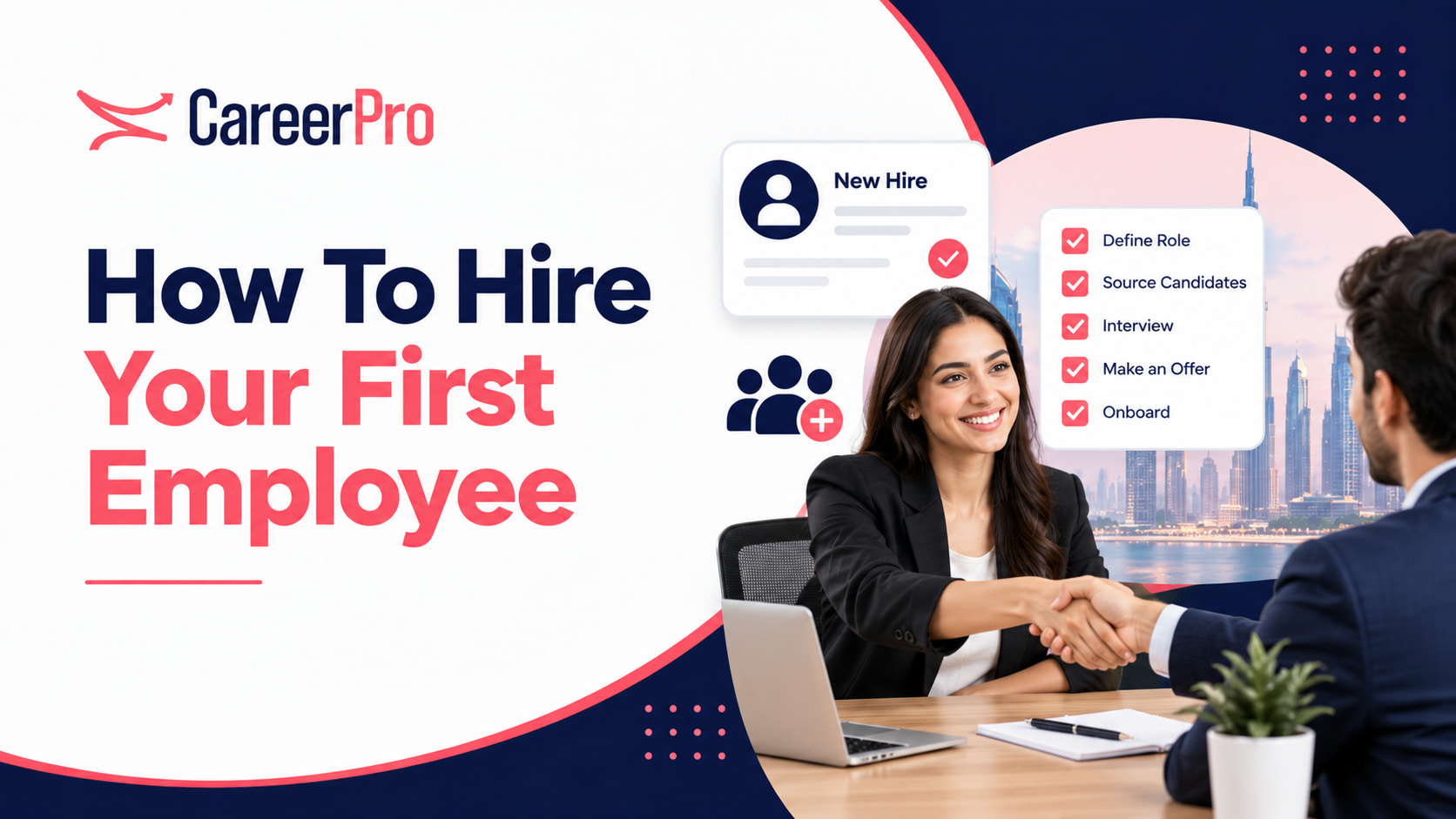
5 Steps of Hiring Your First Employee
Once you have determined that you genuinely need support to manage and grow your business, you can move forward with the hiring process by following the steps below:
1. Clarify the Purpose of Hiring
Before you start looking for candidates, clearly define why you need to hire your first employee and what you expect them to contribute to the business. It helps you create a focused job description that attracts relevant candidates. Here’s what to consider to define purpose:
- Identify gaps in current work, including missed deadlines, delayed tasks, or quality issues
- Determine which responsibilities require dedicated ownership and accountability
- Define the improvements the business expects from filling the role
- Establish measurable objectives for the employee’s first 30, 60, and 90 days
2. Imagine Your Ideal Candidate
Before posting a job description, you must have a clear picture of your ideal candidate, as it will help you evaluate applicants against the qualities that matter most to your business. Here are the attributes that you must focus on for your first hire:
- Identify the technical and soft skills the candidate must have to perform the role effectively.
- Determine the education, certifications, experience, or industry knowledge necessary for the position.
- Consider traits such as reliability, communication, adaptability, initiative, or problem-solving ability.
- Decide whether your business needs a full-time, part-time, temporary, or contract worker based on the workload and budget.
- Distinguish between essential requirements and preferred qualities so you do not unnecessarily narrow your candidate pool.
3. Write a Compelling Job Description
A detailed, descriptive, and clear job description helps qualified candidates understand the opportunity and decide whether it fits them or not. Focus on adding the following elements in the job description:
- A specific and accurate job title that clearly reflects the role
- A concise introduction to your company, its values, and work environment
- A detailed list of the position’s key duties and responsibilities
- Essential qualifications, skills, experience, and preferred attributes
- Benefits, perks, and other incentives offered to employees
- Salary range and other relevant compensation details
4. Identify Your Best Candidates
After publishing a job description, you start receiving applications from candidates, which need to be reviewed carefully to pick the right one who best matches the role and your business needs. Here’s how you can identify the top candidate:
- Check each applicant’s relevant experience, skills, qualifications, and career background against the requirements of the role.
- Schedule a brief 15–30-minute conversation to assess communication skills, availability, salary expectations, and overall suitability.
- Focus on essential qualifications and skills rather than choosing candidates based only on impressive job titles or lengthy resumes.
- Prioritize applicants who have demonstrated the ability to handle responsibilities similar to those required for the position.
5. Ask Structured Interview Questions
After shortlisting candidates, structure the questions for the interview to understand their experience, problem-solving ability, adaptability, and approach to responsibility. Ask every candidate a consistent set of questions:
- Ask how they handled creating a process with limited guidance.
- Ask about their proudest professional result and how they measured it.
- Ask how they responded when priorities changed quickly.
- Ask what support and information help them perform effectively.
- Ask what they would aim to learn or accomplish during their first month.
What to Do After Hiring Your First Employee?
After you select the right candidate, follow these steps to onboard them successfully and build a strong working relationship.
Send Hiring Documents
Send a signed employment contract or formal offer letter via a secure document-sharing platform such as Dropbox or OneDrive, outlining the employee’s job title, salary, working hours, start date, responsibilities, benefits, and the probationary period.
Collect Tax and Payment Details
Collect the information, including bank account details, tax information, employment details, payroll forms, or Social Security information. All details are needed to process salary payments and meet applicable tax and payroll requirements.
Provide Training and Guidance
Rather than expecting employees to figure out everything independently, provide them with training and guidance about your business and goals. Train the employee on the practical skills and tasks required for their position.
When Should You Hire Your First Employee?
The timing of your first hire is crucial. Waiting too long can lead to burnout and stagnant growth, while hiring too early can strain your budget and divert resources away from essential business investments.
Here are some clear signs that it’s time to make your first hire:
- When new clients are approaching you, projects are piling up, or you are consistently missing opportunities because it’s more than your current capacity.
- If you are constantly working late, struggling to take breaks, or feeling physically and mentally exhausted due to workload.
- If your revenue is consistently strong and your cash flow is predictable, it may indicate that your business is financially ready to support an employee.
- When you spend 80% of your day handling administrative and repetitive tasks, you focus less on activities that directly contribute to business growth.
When You Need External Recruitment Support?
Although you can manage the hiring process independently, external recruitment support may be useful in certain situations outlined below:
- You may struggle to assess the right candidate and conduct structured interviews.
- When you need specialized expertise such as software development or cybersecurity.
- If job advertisements generate irrelevant applications or fail to attract qualified candidates.
- If you need an employee urgently to meet client commitments or support business growth.
- If you are unfamiliar with employment contracts, right-to-work checks, background checks, or local hiring regulations.
Conclusion
Once you understand how to hire your first employee by identifying your business needs, setting a realistic budget, and conducting structured interviews, you can choose the right candidate to contribute significantly to your business growth.
Make your first hire a step toward long-term success with CareerPro. As a leading recruitment agency in Dubai, we help businesses manage the hiring process, from candidate sourcing and selection to compliant onboarding, payroll, and employee management.