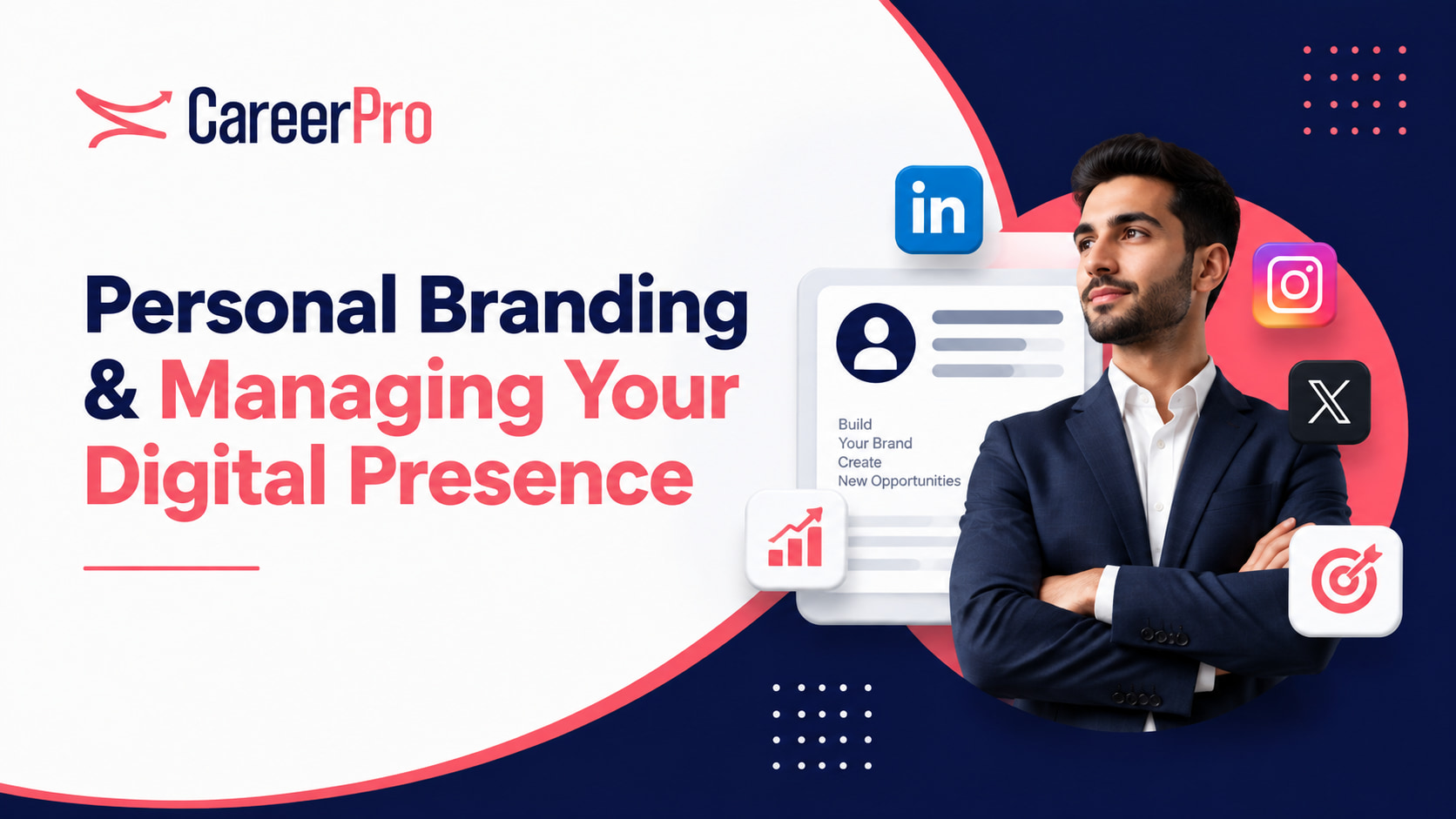
Personal Branding & Managing Your Digital Presence


Table of Contents
From LinkedIn profiles to social media and personal websites, your digital presence can influence how employers, clients, and business partners see you. Here, personal branding for job seekers works as a secret weapon that helps them build a distinctive, authentic, and influential professional identity both online and offline.
A recent report by Autofaceles highlights that 70% of employers prioritize personal brand instead of a traditional resume. If you want to stand out in today’s competitive job market, then keep reading this guide to explore effective strategies for personal branding and managing your digital presence to distinguish yourself from the crowd.
What Is Personal Branding?
Personal branding is the concept of building your unique professional identity, based on experience, expertise, values, personality, and reputation that help others to understand what makes you different.
Example: If two marketing professionals are applying for the same position with similar qualifications. The candidate who shares valuable industry insights on LinkedIn and publishes an active blog is more likely to demonstrate expertise and catch a hiring manager’s attention.
Importance of Personal Branding For Job Seekers
In today’s digital world, building a personal brand is crucial for job seekers to shape their first impression. Here’s how it works for them:
- It differentiates you from the hundreds of candidates who applied for the same position.
- A well-crafted personal brand helps employers to recognize your reliability and expertise.
- It connects job seekers with industry leaders, mentors, and potential employers.
- A personal brand ensures that you are never completely reliant on a single job.
4 Ways to Build Personal Branding That Helps You Hunt Jobs
A strong personal brand for job seekers requires more than maintaining a LinkedIn profile. From analyzing your existing digital presence to staying consistent, here are 5 expert strategies that help you build a personal brand that strengthens your digital presence:
1) Analyze Your Current Digital Presence
Start by searching your name online and reviewing all your social media accounts, professional profiles, and any existing content. It helps you understand how you currently appear to others.
Note: Identify outdated information, inconsistencies, missing achievements, or content that may weaken your professional image.
2) Define Your Unique Value Proposition (UVP)
A Unique Value Proposition (UVP) is a clear statement that explains what you offer, how you help, and what makes you different from other people or businesses.
Note: Assess your core skills, experience, values, strengths, and passions to create a clear picture of what you can bring to the table and why employers should consider you.
3) Understand Your Target Audience
Knowing the target audience and where they engage online is a fundamental factor in personal branding for job seekers. It helps you to strategically position yourself on the right platforms.
Note: Decide which role and industry you want to target, identify the recruiters and hiring managers, and understand their needs. Find the right platform, such as LinkedIn, to reach them.
4) Craft A Personal Brand Statement
Creating a personal brand statement with 1-3 sentences is essential for networking, job searches, and overall career development, that help employers check out your reputation.
Note: Create a story that highlights how you built your expertise and overcame professional challenges. Practice presenting your story in different ways.
5 Ways to Manage Online Presence For Job Searches
Building a personal brand is only the beginning. You also need to manage your online presence effectively to stay visible, relevant, and competitive throughout your job search. Here are five effective ways to do it.
1) Optimize Your LinkedIn Profile
LinkedIn profile optimization is crucial for strengthening online presence, as 75% of recruiters use LinkedIn to source potential candidates. Optimizing your LinkedIn profile photo, headline, about section, skills, experience, and content can make you more prominent.
2) Share Industry-Related Content
By sharing valuable content, including blog posts and LinkedIn articles with industry insights about the latest trends, you can demonstrate yourself as an expert in your niche. Regular posting can help you remain visible to recruiters, hiring managers, and professionals in your field.
3) Build Strategic Networking
Strategic networking helps job seekers to strengthen their professional position over time. Common ways to network include attending industry events, joining LinkedIn discussions, participating in community events, engaging with clients, and joining local business groups.
4) Consistent Professional Image
Make sure your LinkedIn profile, CV, portfolio, website, and other public profiles communicate a consistent professional identity. Use similar information about your skills, experience, career focus, and achievements across every platform you use to maintain reliability.
5) Monitor Your Online Presence
Google yourself by searching your name to review what potential employers can find about you online. Set Google alerts for getting notifications, check social media settings, review privacy settings, and update outdated information and content.
How to Measure Your Personal Branding Success?
Here are some major key metrics that help job seekers to understand how successful their personal branding efforts are and their online presence in job searches:
- LinkedIn Profile Views: Track profile views over time; as views increase, it indicates stronger visibility.
- Unique Visitors: Monitor how many new people visit your profile or website, as the growth shows reach to a wider audience.
- Search Appearance Rate: Check how often your profile appears in searches and which keywords drive visibility.
- Engagement Rate: Measure likes, comments, shares, and interactions with your content.
- Audience Growth: Track increases in followers and relevant professional connections. Steady growth shows expansion of your networking efforts.
- Inbound Recruiter Inquiries: Count messages and opportunities from recruiters, as more relevant inquiries indicate the potential of your personal branding.
5 Personal Branding Pitfalls That Can Hurt Your Career
Putting effort into strengthening your online presence for job searches can be undermined by the following personal branding mistakes:
1) Inconsistent Messaging Tone
Using different professional messages, tones, and career goals across platforms can confuse recruiters and weaken your credibility.
2) Incomplete or Inactive Profile
Leaving LinkedIn, portfolios, or professional profiles incomplete or outdated can reduce visibility and make recruiters question your commitment.
3) Listing Without Measuring Results
Listing responsibilities without quantifying achievements makes your experience less convincing to employers.
4) Copying Professional Styles
Copying another professional’s content, communication style, or career image can make your brand appear generic and limit differentiation.
5) No Long-Term Goals
Building a personal brand without defined career goals can attract irrelevant opportunities and make your professional direction difficult for employers to understand.
Conclusion
Having strong skills can help you qualify for a job, but personal branding can help employers remember you. Your LinkedIn profile, social media activity, portfolio, content, and professional interactions all contribute to establishing your strong online presence in job searches that position you as a strong candidate for your desired role.
Looking for the right career opportunity? Career Pro can help connect your skills and experience with suitable job opportunities while supporting your professional growth.