Types of Interview Methods & Formats (employer-intent)


Table of Contents
Interviewers use different interview formats such as individual, group, or phone interviews to recruit candidates. An understanding of each of them helps in preparing accordingly.
For instance, a hiring manager might ask you various behavioral and situational interview questions to see how your skill set and experience align with the role. The case might be that you also face other interviews, like informational interviews, which help you evaluate a particular type of work, company, or industry.
Learn some of the types and formats of interviews that you might have to face during your job search.
What are Interview Formats?
Interview formats are the different ways an employer chooses to conduct an interview. It can be in person, online, over the phone, or with a group of people. The format also depends on the hiring goals. A company might use one method to screen candidates to make a final decision of either hiring or not.
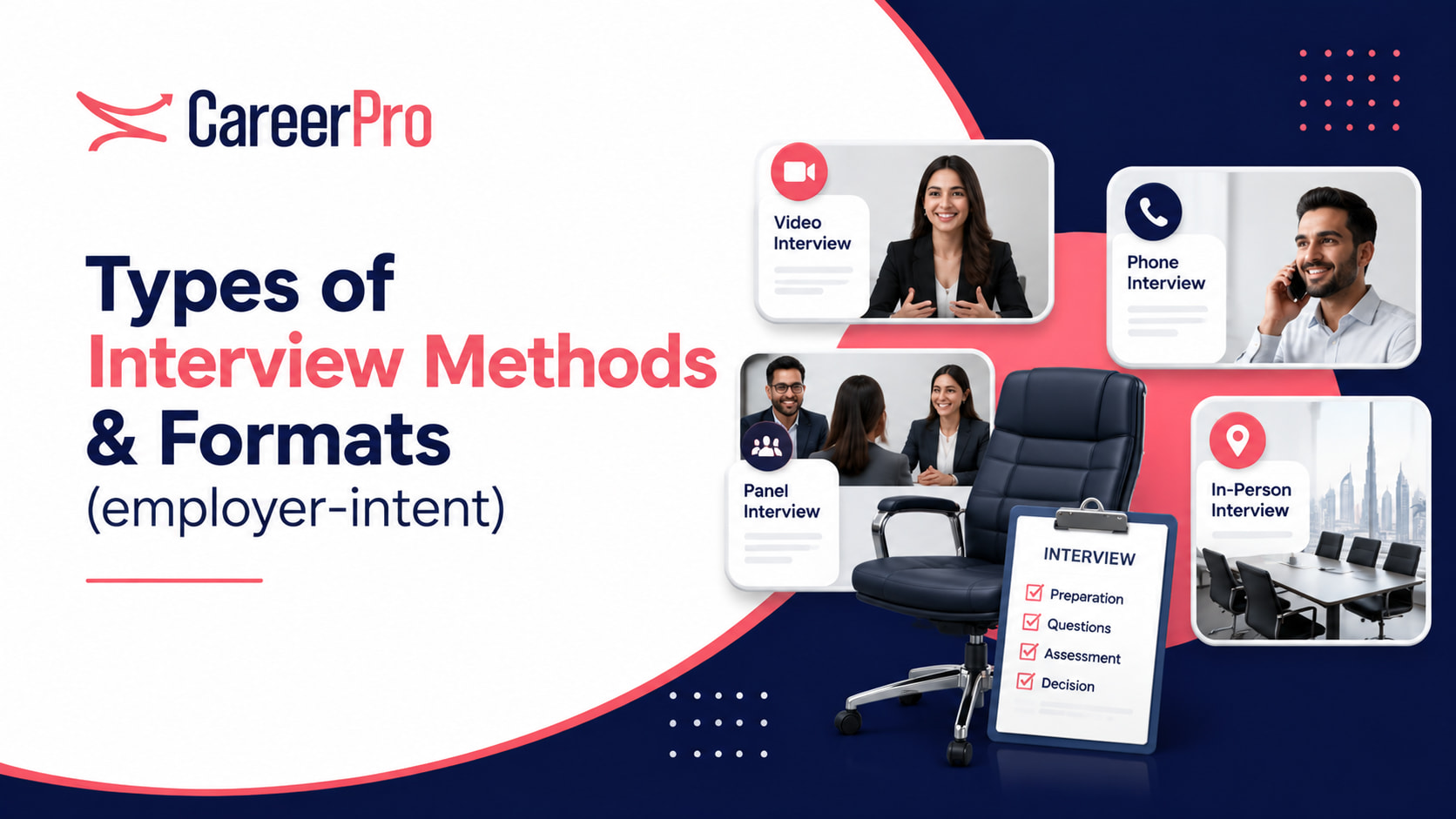
8 Types of Interview Methods and Formats
From phone interviews to technical interviews, each of them is different from the others in terms of job seekers preparing for them and the role of the company. You need to watch for some of the red flags in each of the categories.
1) Phone Interview
One of the most commonly used as an early screening step. When the employer connects through a call, they learn about your experience, interest in the role, and some basic qualifications.
How job seekers should prepare
Applicants must keep their answers clear and focused on the question. They should show their interest in the position and be ready to discuss their experience.
What companies look for
The company aims to check if the candidate meets the basic requirements. The role and next steps are explained to the applicants.
Red flags to consider
If the recruiter asks for sensitive or personal information that has no connection to the relevant hiring process, do not share it. Additionally, appointing you without any proper interview process is an indication that you need to check the company information.
2) Video Interview
For the video interview, the recruiter uses platforms like Zoom, Microsoft Teams, or Google Meet. These options allow employers to interview candidates remotely.
How job seekers should prepare
Before the interview begins, the candidate must test their camera, microphone, and internet connection, in addition to preparing for the interview. They should join on time and choose a quiet and professional setting.
What companies look for
The companies provide meeting details in advance, explaining the process and the interviewer’s name and designation. They check the applicant’s confidence by assessing their knowledge about the position.
Red flags to consider
If the company is repeatedly canceling the interview without a clear reason, this shows an indication of poor communication. Even a request to download unusual software with sharing your sensitive information during the call must be treated as a rising concern.
3) In-person Interview
Apart from the digital interview in your setting, in-person interviews are a category of interview formats where candidates have to visit the office or corporate space to meet the interviewer face-to-face.
How job seekers should prepare
The candidate is expected to arrive on time or before the time, dress appropriately, and communicate professionally. These meetings teach them more about the role and the workplace.
What companies look for
The company provides a clear location to the candidate. Your time management skills, along with the way you answer the questions, are judged by the hiring team. Along with this, they see the way candidates present themselves.
Red flags to consider
When you visit the workplace, find out if the location is a professional setting. Unsafe, highly disorganized, and different from the official images on the website are warning signs.
4) One-on-one Interview
One of the types of interview methods is the one-on-one interview. It involves one candidate and one interviewer. It is one of the most common formats of interviews.
How job seekers should prepare
The candidate must answer all the questions honestly and give examples that show their skills and experience. Apart from answering the team’s questions, they should also ask relevant questions about the position.
What companies look for
The interviewers explain the role and assess the candidates based on the basis of the questions if they are suitable for the position. Giving the candidates a chance to ask questions further helps them evaluate whether the candidate is interested in the role, apart from the role information.
Red flags to consider
Watch out, if the interviewer is not able to explain the job clearly and repeatedly changes the responsibilities, there is something hidden. Even if you are restricted from asking questions related to the salary and working conditions, this is alarming.
5) Panel Interview
A panel interview is different from all the above-mentioned interviews. Here, several people interview one candidate. The role of each interviewer focuses on a different area.
How job seekers should prepare
The candidate must be calm and interact with the entire panel throughout the interview. They must address and answer the person on the panel who has questioned along with maintaining eye contact with the other interviewers even.
What companies look for
Each member of the panel has a specific purpose. They avoid answering the same questions. Each member judges the candidate for the specific role they are assigned to. If candidates fit most of the requirements, they are selected.
Red flags to consider
A situation where the interviewers interrupt constantly or behave disrespectfully signals a problem with workplace culture. Each interviewer has a specific role in evaluating the candidate, if there is a lack of coordination between them, this signals poor organization.
6) Group Interview
When the position is for teamwork, or when the candidate clears all the initial interviews, the types of interview methods most commonly used are group interviews. It involves several candidates at the same time.
How job seekers should prepare
The candidate should prepare without trying to dominate the discussion. Listening, cooperating, and respecting other candidates is important. They should wait for their turn and oppose someone’s point in a professional manner.
What companies look for
The company gives each candidate a fair chance to participate. They evaluate their teamwork skills and the way they professionally interact with the other candidates.
Red flags to consider
Be cautious if the company asks candidates to compete against each other or if it provides little information about the actual job. These signs mean that you need to cross-check the company before signing a contract with them.
7) Behavioral Interview
This type and format of the interview is different from others. The interviewer asks about real or hypothetical situations.
How job seekers should prepare
The candidates must address these questions using real examples from work, education, volunteering, or other relevant experiences.
What companies look for
Companies in such interviews look for the ways candidates use their theoretical knowledge in practice. They judge the way a candidate handles a situation rather than judging unrelated personal experiences.
Red flags to consider
The employer is bound to ask questions that are relevant to the role. Questions about protected or highly personal matters are inappropriate. Be aware if the interviewer seems more interested in personal information than job-related behavior.
8) Technical Interview
A technical interview is specifically designed for testing knowledge or skills that are needed for a job. Candidates from fields like technology, engineering, finance, and data often face these interviews.
How job seekers should prepare
The candidate must prepare for both knowledge and practical problem-solving skills. They must know the way they reached an answer rather than giving only the final results.
What companies look for
When interviewing candidates, employers test skills that are relevant to the position. Each person is tested on the level of difficulty they have applied for in the position.
Red flags to consider
Be cautious if the company assigns you advanced-level work in an entry-level position without explaining why. Additionally, assigning unpaid tasks that take hours is a concern.
Conclusion
An understanding of the different types of interview methods and formats makes the job search easier. Each of the format, whether one-on-one or technical interview gives employers a way to assess you. They check for your skills, experience, and communication skills that you bring to the company. A job seeker preparing for an interview must know this to feel more confident and respond in a better way.
FAQs
How long does a typical job interview take?
It depends on the company and the type of interview. A phone screening may take 15–30 minutes, while a detailed or technical interview can take an hour or more.
Should I ask questions at the end of an interview?
Yes. Asking relevant questions shows that you are interested in the role and helps you understand the job better.
What should I do if I do not know the answer to an interview question?
Stay calm and avoid guessing. Take a moment to think and explain what you do know.
Can an employer change the interview format at the last minute?
It can happen, but the employer should inform you as soon as possible.
What should I do after completing an interview?
Take a few minutes to review the conversation and note anything you may need to follow up on.